In the last few weeks, extreme heat has affected our flying-foxes. This and the bushfires currently ravaging eastern Australia are all related – with a warming climate, heatwaves are becoming more frequent and severe, which is exacerbating the bushfires, and also directly causing casualties in flying-foxes.
We’ve mentioned in previous posts that before Christmas, extreme conditions in South Australia killed over 10,000 flying-foxes in a couple of days, and 3-4,000 animals in Victoria.
This last week, we’ve had extreme temperatures in the Sydney and Hunter regions, so much so that on one day Penrith in western Sydney was the hottest place on the planet at 48.9 C. https://www.theguardian.com/…/australian-weather-canberra-a…
This burst of extreme temperature has resulted in mass fatalities of flying-foxes in many camps in the area, made worse by the fact that the flying-foxes are in big numbers in this region, as south of Sydney is basically a burnt wasteland… and that many of the animals are probably weakened by having to fly long distances to escape the fires.
Even Sydney Bats’ home camp has had mass fatalities. We don’t usually experience this, as the valley the camp is in is heavily vegetated and protected – but the storm that went through the local area in November last year caused damage to the vegetation in the valley, leaving it more exposed https://www.theguardian.com/…/sydney-storm-power-cut-to-470… – and we currently have double the usual number of bats resident for this time of year, a result of bats trying to escape the fires…
It’s quite common for people to claim that “it’s just nature”, or “survival of the fittest”, or “we’ve always had heatwaves”. But this isn’t normal. Yes, in Australia there’s always been heatwaves, and droughts, and fires. But they are becoming more frequent, and more severe. Which is in line with predictions made by climate scientists. For our wildlife, this is hitting combined with decreasing habitat, and being forced into less suitable and less protective environments.
Wildlife rescue groups have been doing what they can, but their ability is limited in these extreme conditions. Like the Rural Fire Services who are trying to actively fight the bushfires, there’s not enough resources available to do the job effectively – so compromises have to be made…
There’s some good links available which show the scale of the devastation – I’m deliberately just going to link to them here rather than share them, with the caveat that yes there’s good information but it’s distressing…
Flying foxes are dying en masse in Australia’s extreme heat
In three days before Christmas, thousands of the mammals died in 110-degree heat in one Melbourne park.
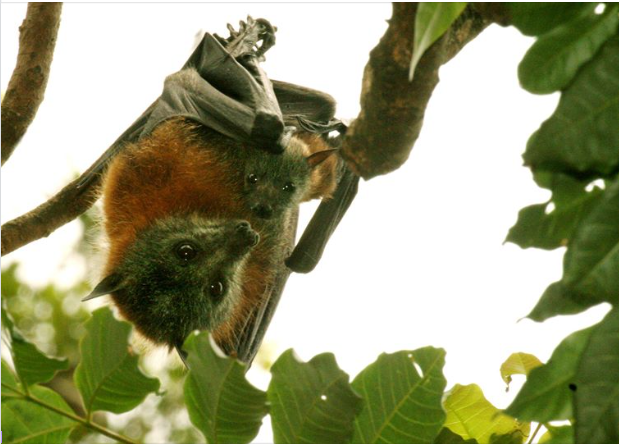
Dozens of panting, suffocating gray-headed flying foxes clump together in an attempt to survive 110-degree heat in Yarra Bend Park, outside of Melbourne, in late December. Some 4,500 foxes, including many of these seen here, died over three days in the park.
The 30,000 gray-headed flying foxes in Yarra Bend Park, just outside the heart of Melbourne, Australia, were having a fairly normal early spring.
In September and October—springtime in Australia and prime birthing season for the 11-inch long megabats—many of the flying foxes had returned to the park from their winter migration
up the coast. Females were birthing pups as normal, says biologist Stephen Brend, who is in charge of monitoring gray-headed flying foxes in Victoria province, including at Yarra Bend Park, which is home to a significant colony of the bats. All was routine.
“And then the horror started,” Brend says. “It got too hot, too quickly.”
Incapable of surviving the extreme, relentless heat that gripped Melbourne in December, the flying foxes were dying. Across three days just before Christmas, when temperatues exceeded 110 degrees Fahrenehit, 4,500 of the park’s gray-headed flying foxes perished—15 percent of the colony’s population.
The tragedy for flying foxes in the park echoes scenes of wildlife suffering across the country and puts a spotlight on the perils of extreme heat, which for some species can be just as deadly as fire. Great and small, fast and slow, Australia’s endemic animals are falling victim to the heatwaves and fires that are ravaging the country at an unprecedented scale. It’s the hottest and driest summer in Australia in recorded history. As the planet warms, large-scale fires are becoming more frequent, and bushfire seasons are getting longer.
For gray-headed flying foxes, which are classified as vulnerable to extinction by the International Union for the Conservation of Nature, the Yarra Bend event is not isolated. “The colony in Adelaide suffered even worse,” says Brend. Several thousand flying fox babies died there from extreme heat between November and January, says Justin Welbergen, associate professor of animal ecology at Western Sydney University and president of the Australasian Bat Society. On January 4, many thousands of flying fox babies died across multiple roosts in and around the Sydney region in New South Wales, where the temperature reached a record-breaking 121 degrees Fahrenheit. Welbergen’s team, which monitors flying fox heat stress conditions, is calculating a final death toll.
This summer’s extreme heat and extreme fires, which have imperiled Australia’s entire eastern coast—prime flying-fox habitat—“risk wiping out the 2019 generation” of newborn bats, Brend says. Some 80 percent of flying fox pups are born in October. They were young and vulnerable when heat waves and wildfires broke out late last year.
Hour by hour in extreme heat
A day in the life of a flying fox in a heatwave is unforgiving. By 5:30 a.m., as dawn breaks, the bats have returned to their trees after spending the night feeding on nectar and fruit. By 8 a.m., Brend says, it’s getting hot in their roosts. The bats fan their wings to keep cool, but they can only do it for so long before they start to get tired, he says. By noon, they’re getting exhausted, and temperatures continue to climb. The bats start to pant, which accelerates dehydration.
At that point, they could fly into the river to get a drink (the Yarra River runs through the middle of the 640-acre park), “but it’s like us running to the shop in the middle of a heat wave,” Brend says. Flying takes energy, and when they’re exhausted and dehydrated, they’ll simply stay put.
Distressed and starting to panic, the bats try to find a cool spot. Mothers will deposit their babies on branches and separate, Brend says, searching for a tree trunk that might be cooler. The bats follow each other—spotting one on a trunk seems to signal to the rest that it’s a refuge. They start to clump together. “It’s like a football scrum of bats,” Brend says. “To the observer, it looks mindless.” The ones who got there first are now surrounded and smothered by dozens of others.
“At that point in time everything has gone wrong,” Brend says. That’s when his team, made up of park staff and volunteers, will step in to try to break up the clumps by spraying them with water, which cools them down and slakes their thirst.
Tragedy on the trees
On December 20th, at the height of the three-day heat event that killed 4,500 flying foxes, “it never got cool,” Brend says. At 9 p.m., the team was out spraying. But it was pitch black, tree limbs were falling, and there are venomous snakes in the brush. “We had to call it off. We couldn’t see. It was 38 degrees [100 degrees Fahrenheit]. It was deeply distressing,” he says. “It was carnage.”
“One falls, and the rest cascade on the ground, crushing and suffocating each other. Dozens if not hundreds of dead or dying bats are at the bottom of the tree,” says Melbourne-based photojournalist Douglas Gimesy, who documented the December rescue efforts. “You’re looking down at them and they’re looking up at you gasping. They’re smothering and heating up. Volunteers will go in and separate out bodies and find some that are still alive. But you’ve got 20 to 30 rescuers and 4,500 bats. It’s like a war zone. It’s sad and distressing and heartbreaking, and you know it will happen again and again and again.”
“Some we get to in time,” says Tamsyn Hogarth, one of the rescuers. “Others die in your hand.” By the third day, on December 20th, the air was thick with “the smell of death,” she says. Hogarth runs Fly By Night, a wildlife shelter in Melbourne dedicated to rescuing, rehabilitating, and releasing gray-headed flying foxes. She and other volunteers rescued 255 babies during the extreme heat events in December in Yarra Bend Park. Two dozen volunteers across Victoria province are currently caring for the bats, which range in age from two to 12 weeks old.
Heatwave deaths are normal for the bats—but this is different.
Hot days causing bat deaths are normal in Yarra Bend Park. “We’re always worried about heat events. You’re not going to get through summer without having really hot days,” says Brend.
Last summer, for example, a few hundred bats died, he says.
One study found that between 1994 and 2007, approximately 30,000 gray-headed flying foxes died in extreme heat events in Australia.
But the timing of this year’s extreme heat—right after birthing season—contributed to unusually high mortality. Because the young were still nursing, their mothers’ energy levels were depleted, and all of them—parents and new babies—are more vulnerable, Brend says. The first weekend in December was extremely hot, and it was followed by a succession of hot days all month, culminating in the three-day death event, reaching a peak of 110 degrees Fahrenheit in Yarra Bend on December 20.
“It’s emotional and frightening for the species. And this is happening across their entire range,” Brend says. While Yarra Bend Park hasn’t been hit by fires, much of the flying foxes’ habitat lies directly in the fire zones along Australia’s east coast.
The bats are nomadic. Much of their range is currently in the fire zones. Many travel north in winter, roosting in forests along the coast, which they may find scorched. The “bushfires have destroyed essential foraging resources on unprecedented scales,” says Welbergen. “There is no refuge for them,” says Brend. “It’s not like it’s bad in Melbourne but will be OK in northern New South Wales—it’s not OK anywhere.”
“That can’t go on for too many cycles before the population declines,” Brend says. “I don’t want to be alarmist or dramatic—there are still thousands of these bats—but there’s no reason to be confident anymore.”
“Our worry is we’ll have the new passenger pigeon,” he says, referring to what was once the most abundant bird in North America before being hunted to extinction in the 19th century.
‘Bats need the forest and the forest needs the bats’
Flying foxes play a vital role in the forest. “Their ecological role is as big, nocturnal bees,” Brend says. They carry seeds and pollinate trees, gardening the forest by night. “Bats need the forest and the forest needs the bats,” says Brend.
And it’s still the middle of summer in Australia. “We’ll battle on for our upside down friends,” says Lawrence Pope, a rescuer caring for five orphaned baby bats at home, “but things look very grim.”
“In this horror year, all species are suffering. It’s really frightening,” Brend says. “We’re hot, and they’re hot, and it’s a nightmare.”
On Bats and Horror in Austin, by Julianne Graper
By now, the rise of Austin’s “bat culture” has been well documented. As I argue in this article (https://journals.lib.unb.ca/index.php/MC/issue/view/2073), bats have become central to Austin’s identity through the efforts of conservationist Merlin Tuttle, who sought to resignify bats as “cool” rather than “scary.” By replacing images from horror films with images of real bats – and even allowing local citizens to see live bats up-close – Tuttle convinced a city not to fear its resident bat colony, but to celebrate it. Tuttle’s photography and information campaigns were so successful that tourists visiting Austin will find bat imagery in local restaurants, shops, murals, statuary… you name it.
While researching my article, I sought to understand how Austin’s status as the “Live Music Capital of the World” overlapped with its reputation as the “Bat City.” Though the two concepts seem unrelated, they intersect in a surprising number of ways. On one hand, images depicting bats in musical poses are surprisingly common – radio station KMFA’s “listen local” logo is one great example (https://www.kmfa.org/programs/3-listen-local). Additionally, a number of local musicians mobilize bat imagery to express their Austinite identity. Some of my personal favorites include the Bat City Surfers (https://batcitysurfers.bandcamp.com/), Echo and the Bats (http://www.dailytexanonline.com/2017/07/30/echo-and-the-bats-make-folk-rock-out-of-folktales), and a truly awesome interactive piece by composer Steve Parker (https://www.steve-parker.net/bat-man/). As I discuss in my article, there are many reasons for bat-music parallels, but they can mostly be boiled down to the efforts of local politicians to identify Austin’s unique character in effort to encourage the presence of tourists.
However, for many people I encountered during my research in Austin, horror imagery remained a significant part of how they related to bats. Bats’ association with horror originated with the colonization of the Americas, in which Europeans grossly exaggerated their experiences with vampire bats in Mexico and Central America, arguably displacing their fears about unfamiliar Mesoamerican indigenous groups with narratives about vampires. In other words, bats’ use in vampire stories and later horror films and stories are modern adaptations of colonial racism that posited indigenous North Americans as less than human. In addition, as scientific activists like Tuttle have argued, such exaggerated fears lead directly to the unnecessary killing of bat populations by ill-informed citizens and profit-mongering pest control companies.
Throughout my research in Austin I discovered that horror narratives that include bats also serve other social functions within present-day human populations. Some of the artists I interviewed capitalized on the colonial roots of horror narratives in order to express their experiences of marginalization in a white-dominated society. For others, bats’ reputation as Other was intimately linked with Austin’s ethos of alterity – a “weird” animal that represented a “weird” city. Normalizing bats might have been the goal of Tuttle’s education programs, but the popularity of Austin’s Chiropterans is also directly linked to bats’ status as “not normal.”
Interestingly, most of the artists that I interviewed were in favor of bat conservation, even when they used imagery derived directly from damaging fictions associated with horror. In most cases, the artists I interviewed did not see conservation and horror as mutually exclusive. In my opinion, this is because most Austinite’s use of horror imagery is self-conscious: it is used as a form of commentary on a particular social situation, using camp. irony, and a host of other discursive techniques to articulate both an acceptance of horror imagery and a rejection of it at the same time. In order to understand these artists, then, we need to read between the lines of their imagery, trying to understand how horror imagery expresses precisely what it expresses to them.
Tuttle’s photography has been successful in changing cultural narratives about bats not because he got rid of existing narratives, but because he replaced them with new ones. Similarly, bats’ use by goths and punks in Austin works because it re-signifies the meaning of existing horror imagery – it takes existing cultural depictions and assigns them new meaning based on changing cultural context. We have to understand what this means – and its relationship to colonialism – in order to address it. How can we use bats to acknowledge colonial history while at the same time developing more positive representations that don’t encourage senseless killing? How can we delve into the source of what we truly fear about bats, what it means, and make it less scary? How can we create art that truly expresses the complexity of our relationships to bats?
NASBR 2019
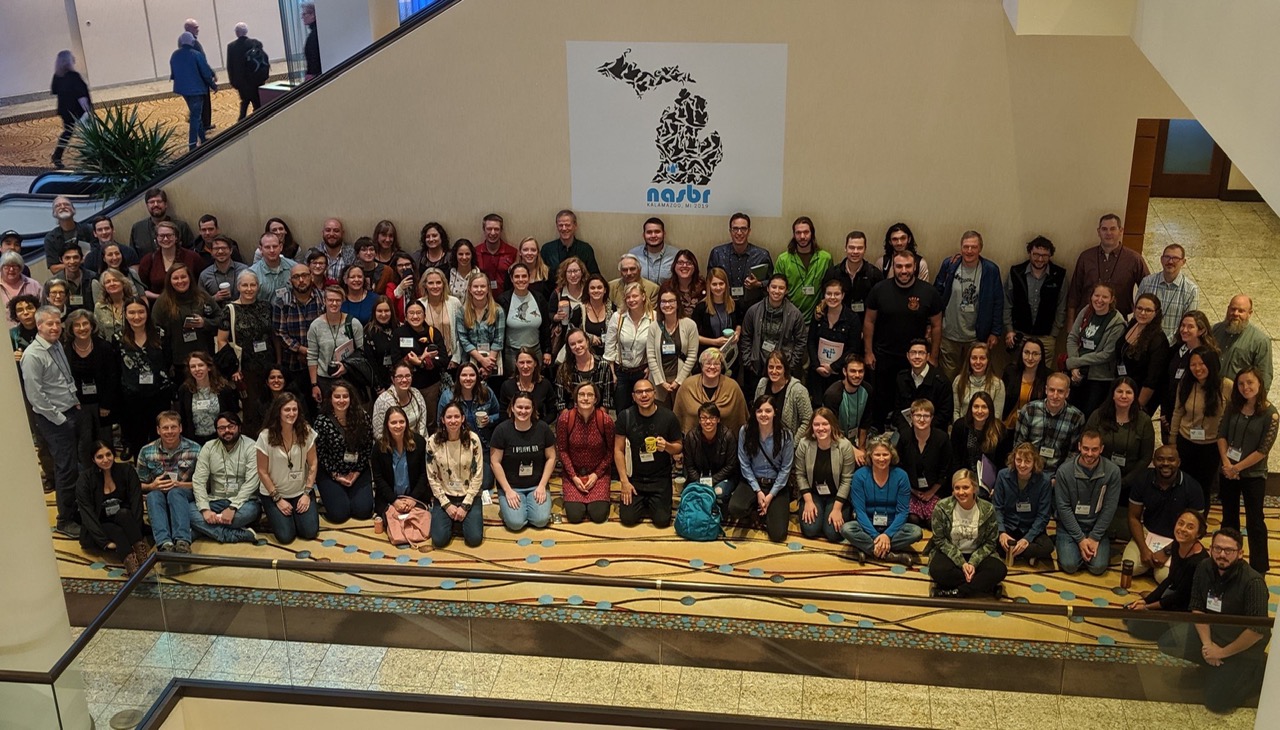
Just back from the 49th Annual Symposium of the North American Society for Bat Research in Kalamazoo, Michigan and what a treat it was!
There’s nothing better than being in a room full of passionate, brilliant people, sharing their hard-won knowledge for the benefit of bats around the world. It is, however, much like drinking from a fire-hose, with a new presentation of cutting-edge research every 15 minutes for three days.
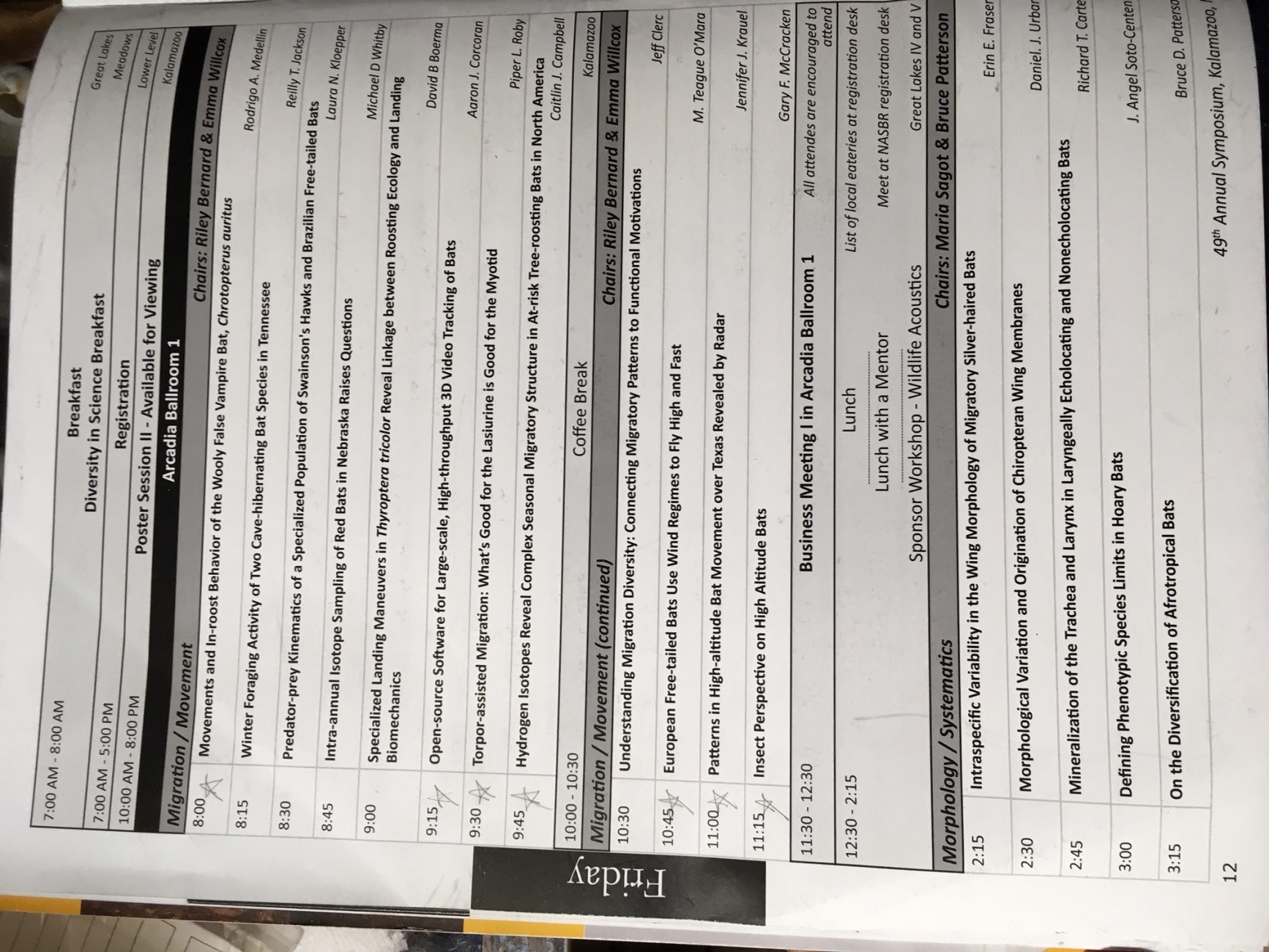
Highlights included a photography workshop led by the legendary Brock Fenton & Merlin Tuttle, and up-and-coming Price Sewell. Rodrigo Medellin presented fascinating work on the second-largest bat in the Americas, the Wooly False Vampire bat, showing that this carnivorous bat requires large, well-preserved forests for its conservation.
We really enjoyed talking to the many undergrads who explained their posters describing results of their fieldwork.
But mostly we were happy to catch up with old friends and make new ones, while discussing the latest efforts to mitigate threats to bats, including WNS, wind turbines, and habitat loss.
On the way back home, we got to wait for a delayed flight with Texas State Mammalogist Jonah Evans, who in addition to leading state efforts to fight WNS, also found time to entertain with his guitar till 1:30 am the previous night in his hotel room. What a good dude!
ABR Volunteer Spotlight – Becca Davis, Intrepid Explorer
The prospect of free entrance into the National Parks,
even for just one day, was too tempting to pass up; so on a Saturday in late
August I threw all my backpacking gear together and headed west. First stop was
Carlsbad Caverns. I stuck around the visitor’s center until the bat flight at
the cavern’s natural entrance. Half a million Brazilian free-tailed bats roost
in Carlsbad and, just as they do in Austin, every night they emerge
impressively from the cave. At least a hundred people had gathered in the
amphitheater, but pictures aren’t allowed at the bat flight (as a precaution for
the bats) which was pretty relaxing. Free-tails are just one of thirteen bat
species in the Carlsbad area.
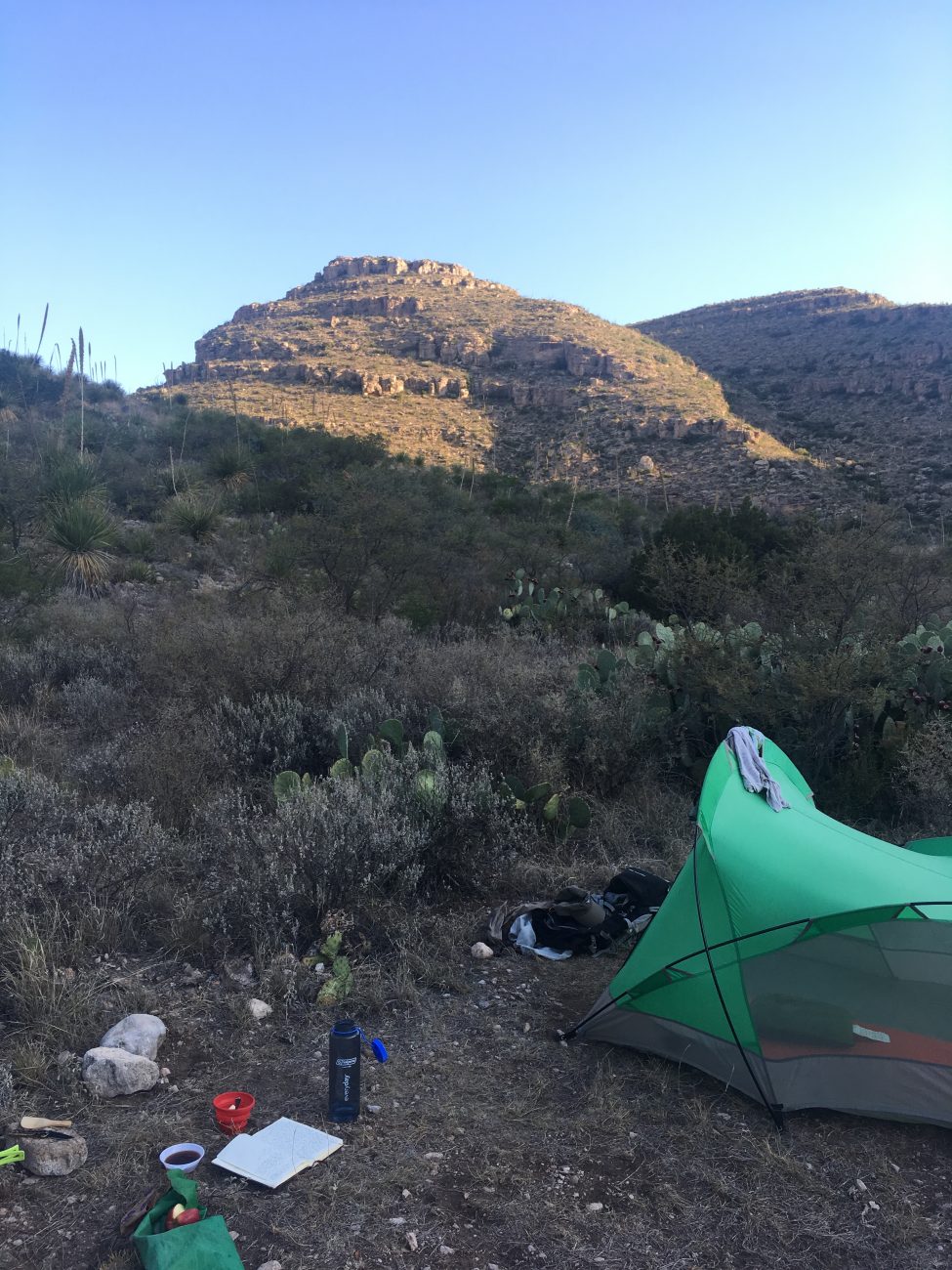
After the bat flight I drove out a dirt road to the trailhead
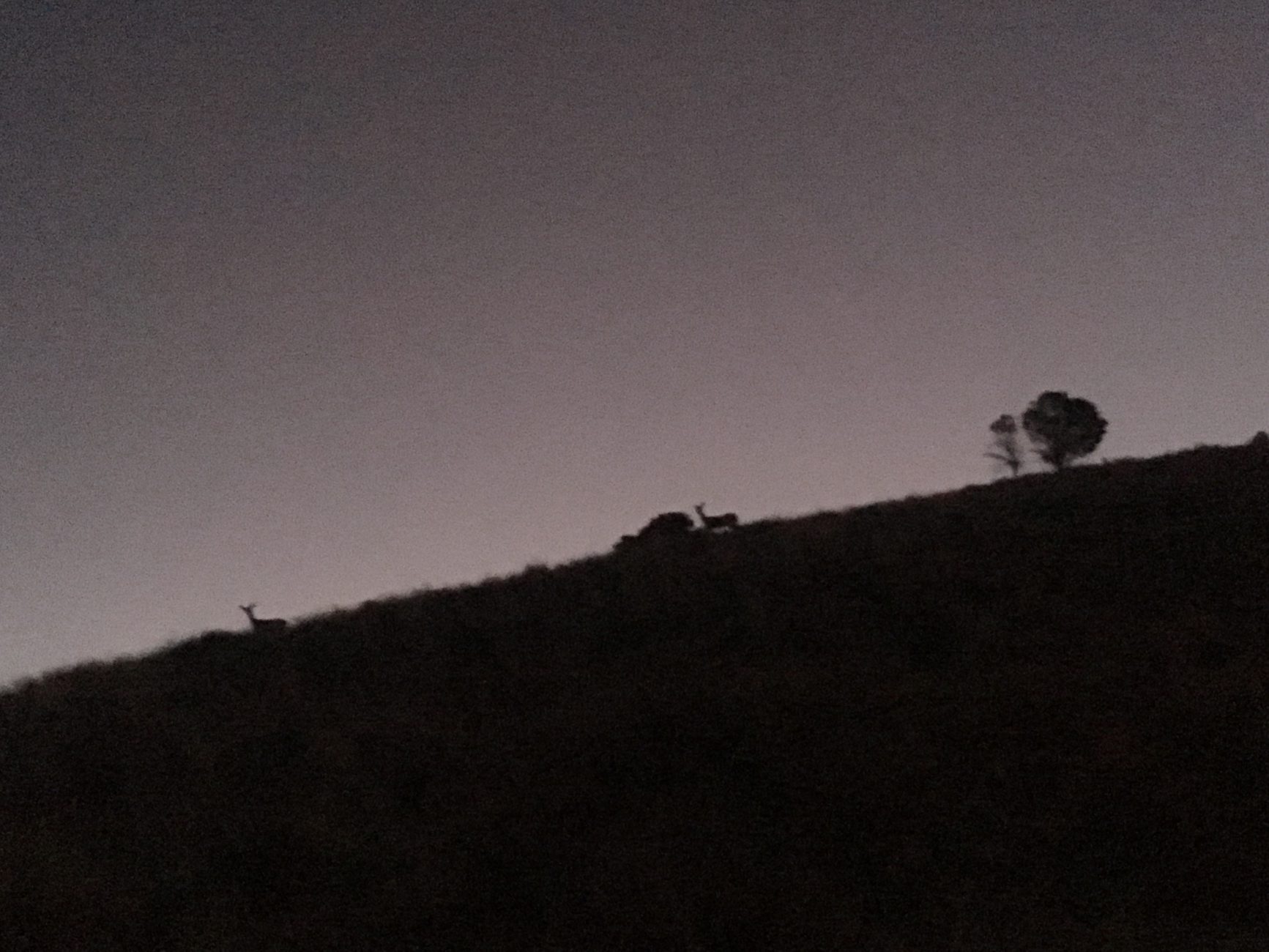
for Rattlesnake Canyon, spotting mule deer, black-tailed jackrabbits, and
common poorwills along the way. I hiked down by the light of my headlamp, and Sunday
morning it was remarkable to see the slopes of the canyon around me that I just
couldn’t see the night before. A walk before breakfast turned up a javelina
that was very surprised to see me and a lot of canyon wrens. After hiking out,
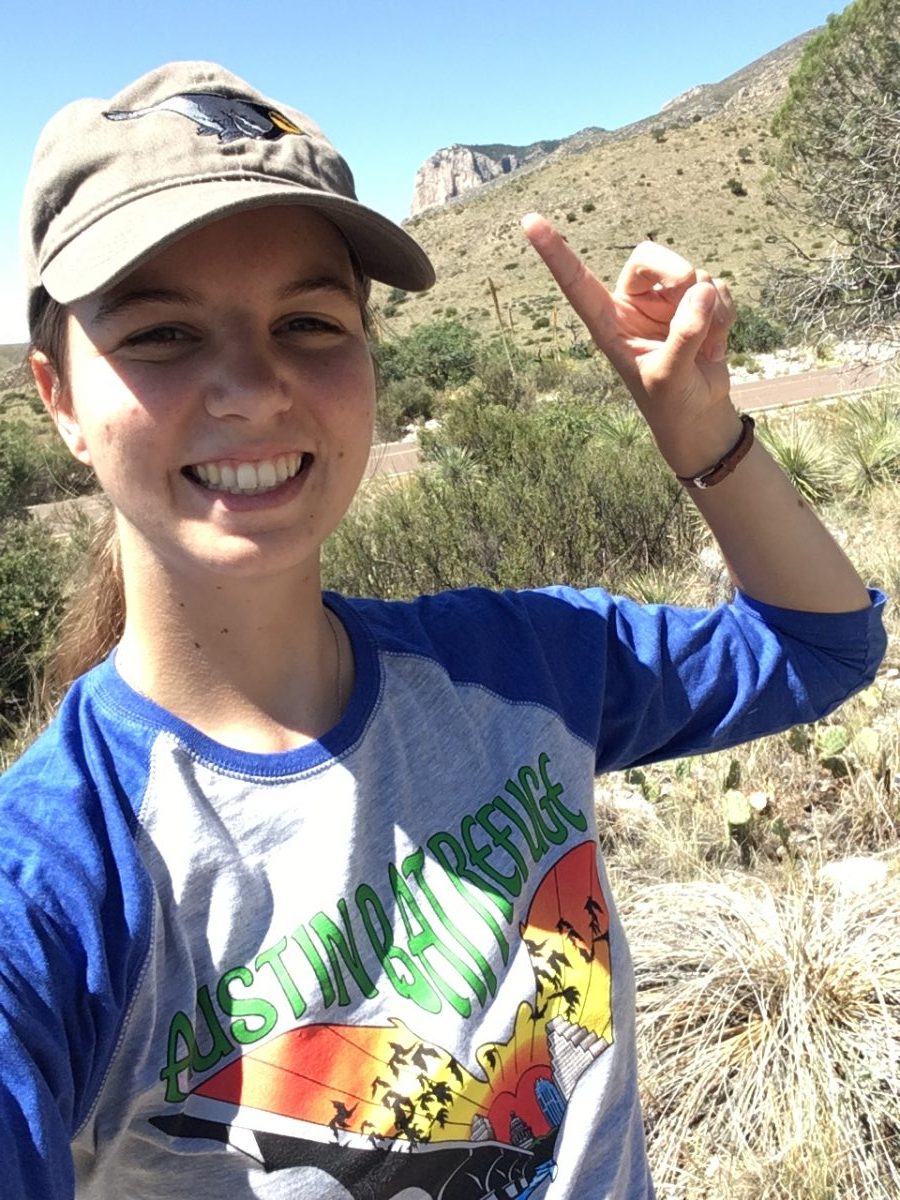
it was down to Guadalupe Mountains National Park headquarters to snap a picture
with El Capitan…..from below, unfortunately, as I didn’t have enough time to
climb it this time.
Rattlesnake Canyon
El Cap
Muly
I started down the Bush Mountain Trail at around
midafternoon. Just half a mile down trail the valley was a flurry of bird activity,
with a whole family of phainopeplas, rock wrens, and rufous-crowned sparrows to
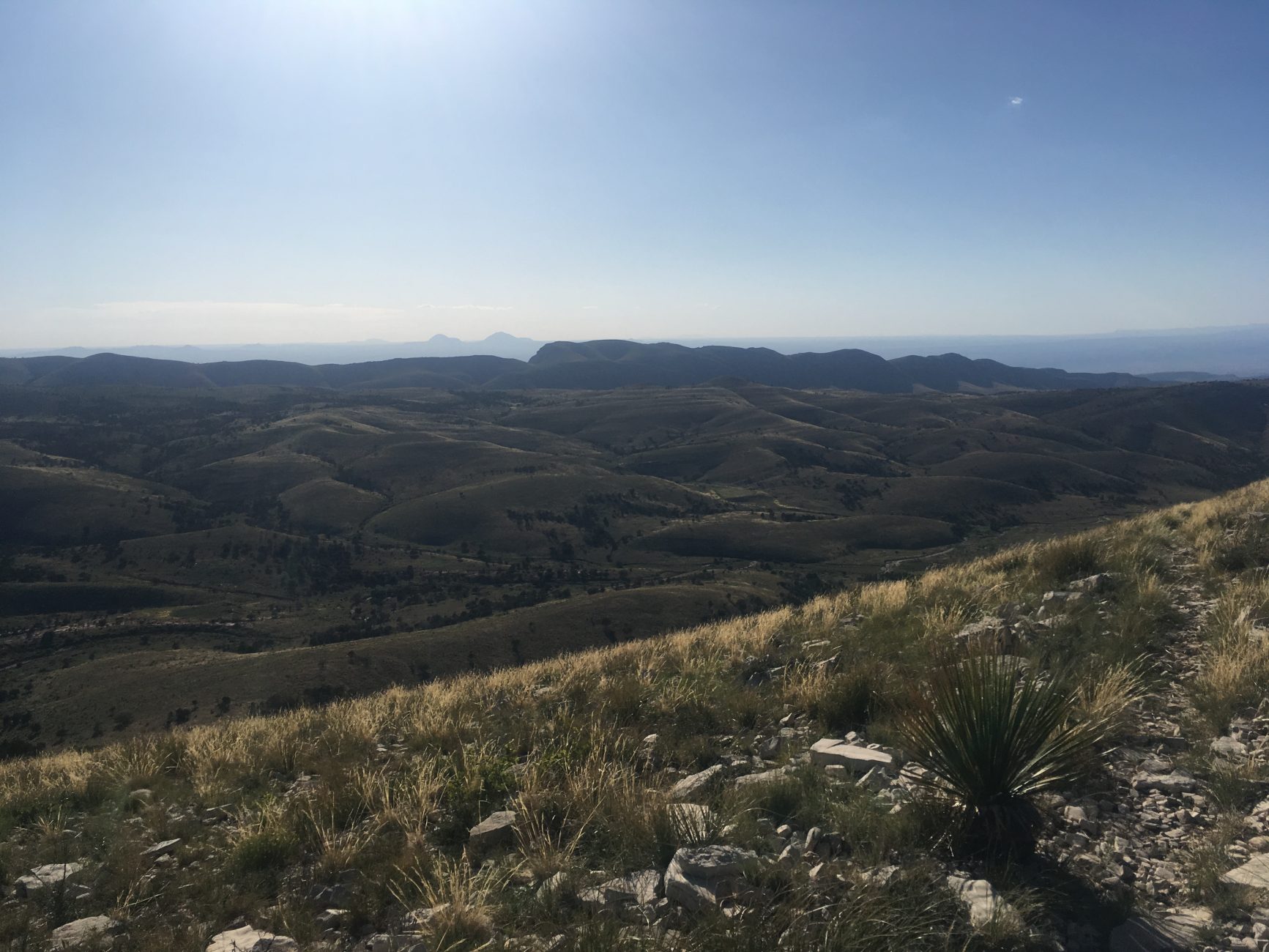
name a few. Bush Mountain treats to spectacular views of the grassy mountains
around you and the Guadalupe Mountains stretching north. At the highest point
of the trail I could look into both Dog Canyon that I’d left behind and West
Dog Canyon. Markus primitive campground was empty except for me, as all the
trails had been that day. As the sun disappeared and the stars became visible,
I was treated to the complete stillness of the wilderness.
Dog Canyon
West Dog Canyon
The next day I got up two hours before dawn and started
hiking out. Two hundred fifty feet up I stopped to make breakfast and watch the
sunrise. It was an easy downhill hike back to my car and the wildlife showed
up. A Pygmy short-horned lizard was warming up on the trail and I added
kestrels, black-chinned sparrows, and a black-headed grosbeak to the bird list.
Eventually I made back to the car and headed home. It was a quick trip, and
featured fewer trees than I imagined, but Guadalupe Mountains is beautiful from
any angle you look at it.
Pygmy short-horned lizard
Bat Fest
The sonic assault from the Austin American Statesman parking lot battered the bats all afternoon, with the addition of a laser light show after dark. Can’t we find a better place for that kind of show? Is this how we show our appreciation and love for the bats?
The bats flew out in the rain during Bat Fest, totally surprising, and unprecedented in our experience. We wonder why they would do that.
We were asked to test a thermal camera for an acoustic deterrent study taking place this fall at Texas State University.
TXSU toured our facilities last year and now will build a larger flight cage per our specifications on the Freeman Ranch, near the university.
This cage will be the site of an acoustic deterrent study aimed at lowering the kill rate for yellow bats at wind farms.
The Department of Energy has granted funds for the study and NRG, an energy company, lent us the thermal camera to test for the study.
There was concern that the size of the netting we specified for bat safety was smaller than the pixel size of the Axis Q1942-E PT Mount Thermal Network Camera, once the camera was placed far enough back to cover half the flight cage in its field of view. Two cameras will be used, one to cover each end of the cage, where the acoustic deterrents will be activated randomly, while the cameras monitor the reactions of the bats. Success in this project could reduce yellow bat mortality around wind farms. Some success has been made in deterrents for Mexican free-tailed bats and hoary bats, but none so far for yellow bats. Hopefully this study will provide some solutions for the northern yellow bats, southern yellow bats, and western yellow bats in South Texas, an area with a large number of wind farms.
Here’s what we found with a camera placed 9.3 meters back from the netting.
Even thought the netting did show up as a worrisome haze, once the bats started flying their metabolisms created plenty enough heat to track them as they hunted moths in the flight cage.
In fact, they look liked comets blazing through the night sky. Furry little shooting stars!
The team was excited at the results of our test, and now can move confidently on with construction of the study flight cage and procurement of the cameras!
We’ll also ensure that the yellow bats used in the study are well cared for, before they are released after 2-3 days in captivity.
Huntsville Colony update
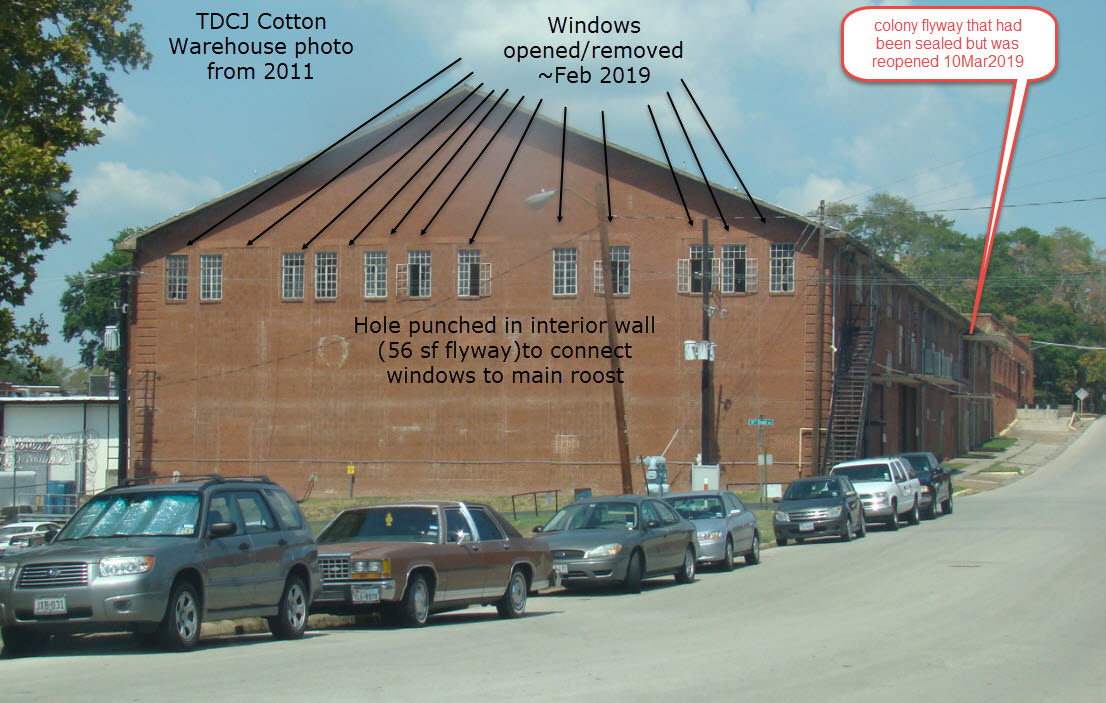
TDCJ responded correctly to “Bats in Buildings” calls, as the bats returned to the warehouse in their spring migration, by opening the historical colony flyway that the warehouse bats had used for over a decade. We are pleased that they allowed the colony to re-inhabit most of their historical space, preventing mass dispersal throught the city.
At a meeting since our last blog post on the topic, TDCJ stated that they would work with our group to ensure the safety of the bats, but they would not spend a penny on professional bat exclusion to safeguard colony. Austin Bat Refuge offered to line up pro-bono bat exclusion advice, knowing that this would be a tricky proposition, with no assurances the bats would inhabit mitigation roosts discussed in our last blog post.
We contacted RD Wildlife, of Albequerque New Mexico, to ask if they would be willling to give their professional advice on the best way to safeguard the bats, while accomodating TDCJ unwavering desire to demolish the structure. Justin Stevenson gratiously agreed to take on this monumental challenge pro-bono! Austin Bat Refuge flew Justin in to Houston, met him at his hotel and drove him up to Huntsville to meet the prison staff and tour the structure. We provided respirators and protective gear and made sure all decontamination protocols were rigorously adhered to. Justin then met with prison officials and gave his initial impressions of the situation.
His report has just been forwarded to prison officials and our working group, outlining at least a 2-3 year timeline, after installation of appropriate numbers and styles of bat houses, using incremental steps and monitoring the bats behavior to make adjustments during the process. And this will be a process!
In an amazing expression of heartfelt goodwill, he has committed his professional consultation, to ensure the safety of the colony, at no charge to the prison system! We are proud to know this human being and to call him our friend!
Strong Flights from Congress
After a first surge around the 9th of March and a second surge on March 14th, a period of cold weather suppressed flights from Congress for another few days.
But last night, March 20th saw two flight totaling around 720 thousand bats from Congress Avenue Bridge. This seems to be the summer colony returned for the season. Were the first surges migrants, or our bats returning in stages? We’d love to know.
We have taken in 34 bats during this spring migration which started around March 8th..
We have had 8 intakes in the last two days, mostly juvenile female free-tails. This could be the bulk of the summer colony trying to remember where the maternity roost is.
Here’s a video of the first flight of over 700k bats from Congress this spring.
Actually two flights the first small one 16 minutes before sunset and the second larger flight 10 minutes after sunset.