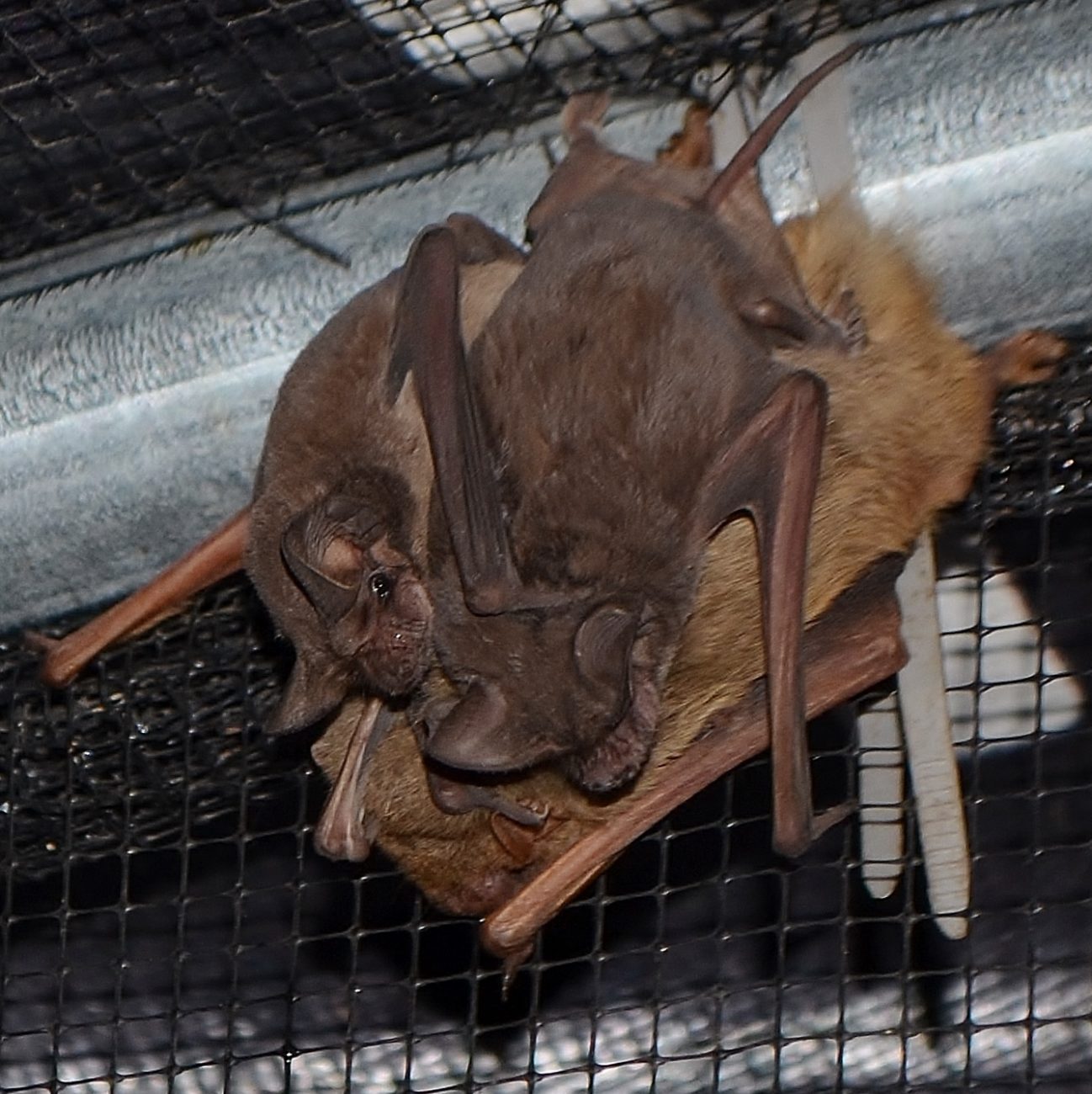
Great night for Central Texas bats as a strong seabreeze pushes moths toward the Hill Country while a North front brings reverse migrating moths back from the northland, making a smorgasborg for Mexican free-tailed bats fattening up for their own migration south at the end of the month. This year’s pups are packing on the grams preparing for their first big journey. Their is a lot going on in this video as the Hill Country roosts are perfectly situated to take full advantage of both fronts.
Here’s the Congress Avenue Bridge bats that same night going with the seabreeze to the NW, to feed on moths pushed along on the leading edge of the front.
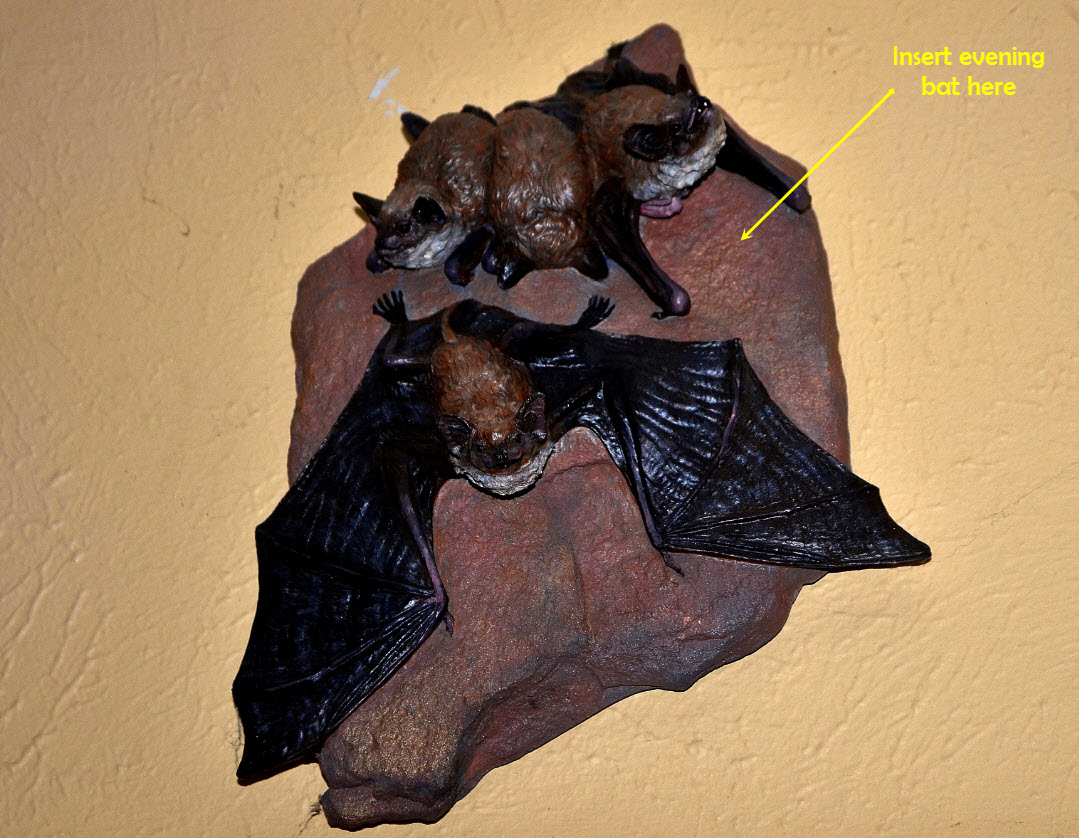
Last year I purchased an art piece for my friends at Austin Bat Refuge, Lee and Dianne; the art work is by Kitty Cantrell. It is her rock art ” Little Brown Bats” It is several little browns on a rock wall and it’s very life like. A few weekends ago Lee and Dianne had a Evening Bat come in for rescue. Evening Bats look a lot like Little Browns except they are smaller and darker color. Sometimes the bats that come in are tested in smaller places to see how well they can fly after necessary rehabilitation has been given. The little bat was enjoying a flight around the front room. Little Evening Bats can fly very swiftly and can crawl on the ground even faster. Its like chasing a cock roach. They can land very suddenly and tuck themselves away in the smallest of places. They are crevice bats after all. Flying around she decided to take a quick stop so fast she almost wasn’t seen. Dianne noticed she had landed and tucked herself right up against one of the Little Brown Bats on the rock art. The little bat was probably wondering why her new found family members weren’t putting off any body heat and why they weren’t clicking to her to greet her. Never the less, she knew she was safe with her new family. She was so happy she even fell asleep all snuggled up to them. Some people mistakenly think that bats can’t see well! That is a myth! They see quite fine day or night. As for Kitty’s art it has been Little Bat tested and Little Bat approved! And to me that is how life-like her art is! I truly Love and believe in Lee, Dianne and Kitty’s missions to make life better and beautiful in the appreciation of Bats and other wildlife. Thanks for reading! Marsha
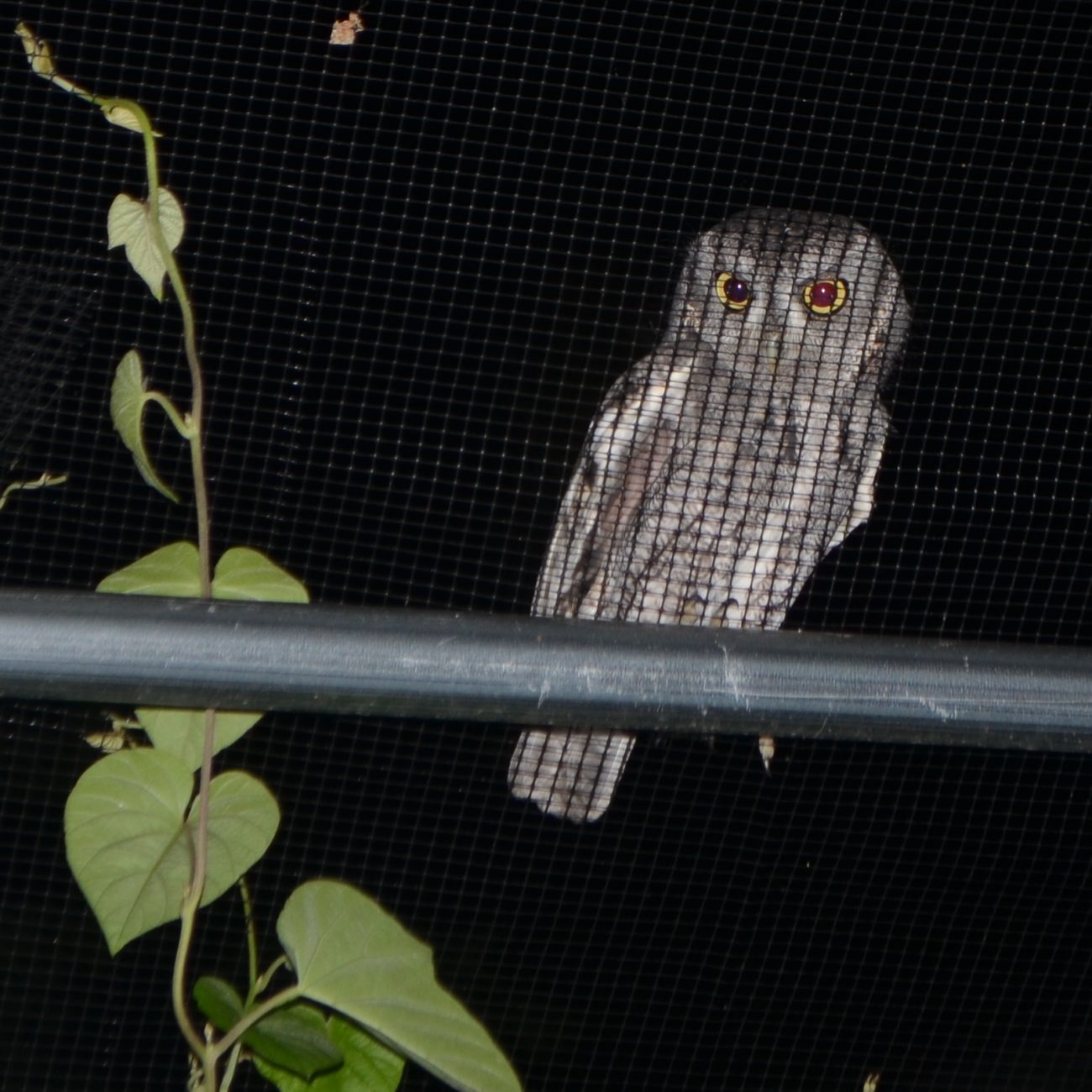
This eastern screech was so focused on our bats, that he allowed us to approach to within 6 feet before finally flying off! The rehabilitating bats are working on their flight skills and for that reason, they attract even more attention from local owls.
Our Mexican free-tail Bernie has a permanently injured wrist but was roaming the flight cage last night. But for the netting, he would have been scooped up in an instant by this owl.
This free-tail is so happy to be flying again and catching moths around the blacklight!
Soon to be back in the wild skies.
Just look at that smile!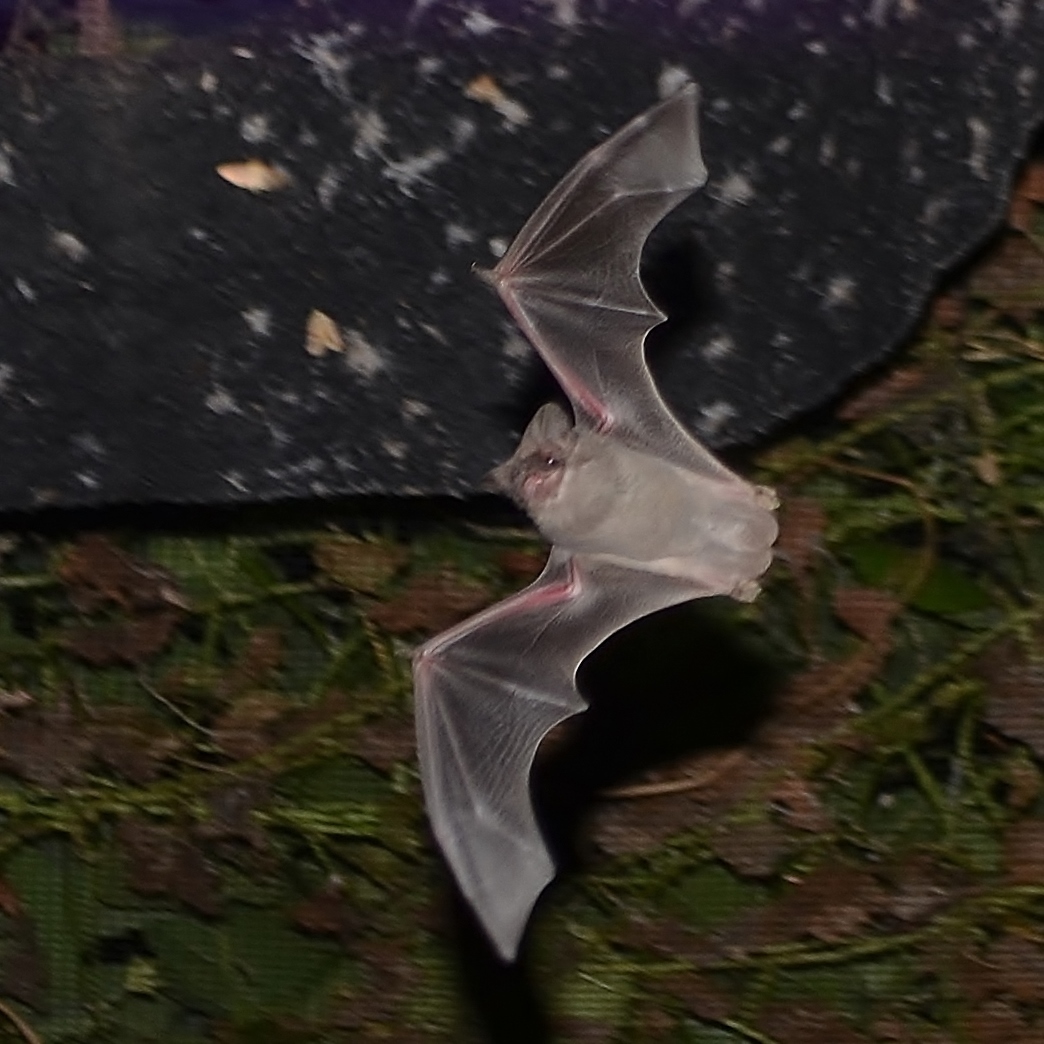
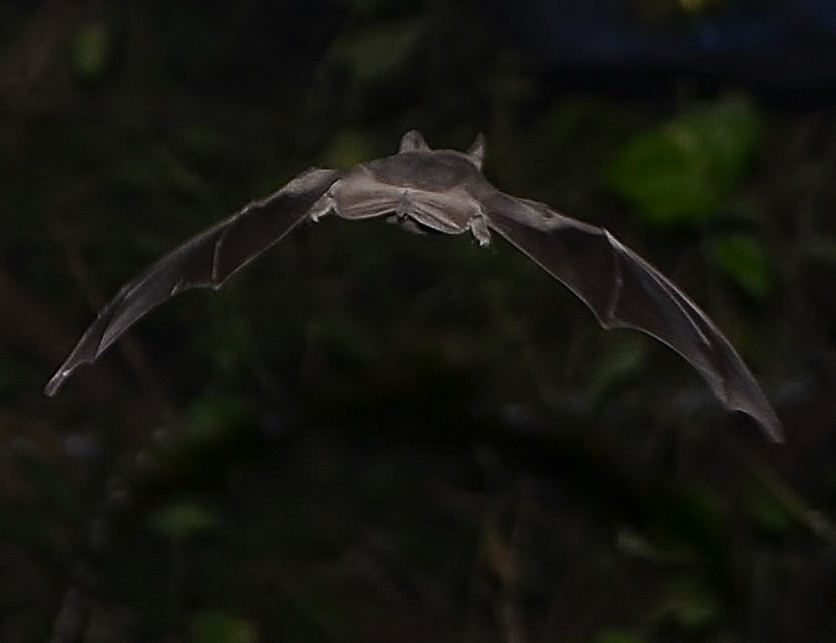
Here’s an angle rarely seen of a Mexican free-tailed bat. If you look closely you can see the long “whisker” hairs sticking out between the toes. “Kind of like you honey” a bridge visitor said to his girlfriend this summer, right before she hit him, hard.
Storms after emergences at Bracken, Congress, and McNeil had bats scrambling for cover last night.
David Chapman took care of hundreds in a parking garage in San Antonio this morning.
He stopped a custodian from sweeping bats off the ceiling onto the driveway inside the garage.
Great job David!

We got a call from Wilshire Homes in Pflugerville.
A bat took shelter in one of their homes under construction.
He apparently flew in an open garage door and went right in the house through the missing deadbolt lock on the door to the interior.


Alejandro, the superintendent, got him in a container for us and we went and picked him up about 23 miles north of our location.
He was a juvenile male free-tailed bat and had a full belly and looked to be in great shape. He drank water from a syringe and seemed bright eyed and full of life. We showed him the deadbolt hole; wonder what he thought about that.

Since he most likely came from the McNeil bridge colony, a mere 7 miles to the west, we decided to take him back there, rather than bring him all the way back to Austin and release him at a different roost at night. I bet he was wondering how we knew where he lived; probably thought he got hacked by Russians!

Well, he barely survived the episode. Releasing during the day is always risky and this time was no exception.
He flew off the hand and instead of quickly entering a crevice, he flitted around under the bridge looking for just the right crevice.
Two different grackles took shots at him and very nearly got him, but he managed to evade them and finally enter a crevice above the support structure.
So glad you made it buddy! We’ll wait till dark from now on, we promise!
Zonker thought about dinner to go but decided on room service instead!
Congress Ave Bridge bats on the full moon
CAB bats head out to forage in the pasture land and agricultural fields between Bastrop and San Marcos on a full moon night.
They don’t seem to be deterred by the full moon, they are flying in big numbers even as the moon rises, although more seem to be staying within the city limits than usual.
One would think that Mexican free-tails would be lunar phyllic, since they feed in wide open spaces away from tree-loving owls and the moonlight might even allow them to better locate prey visually, before kicking in their echolocation when they get within range.
At this time of year (even on a wet year like this one) there is likely less insect prey in the agricultural fields and the bats are eagerly awaiting the reverse migration of the Corn Ear-worm Moth that usually starts in late September. CEM return south in the fall because their pupae can’t overwinter up north. Mexican free-tailed bats depend on this reverse moth migration to put on weight prior to the bats’ own migration south in late October.

Mexican free-tailed bats are built for speed. Their long narrow wings are just one of the adaptations that rank them among the fastest bats.
They are, however, also remarkably agile in tight spaces. They use bone structure and muscle fibers to change their wing aspect ratio to short and broad, allowing high maneuverability when necessary.